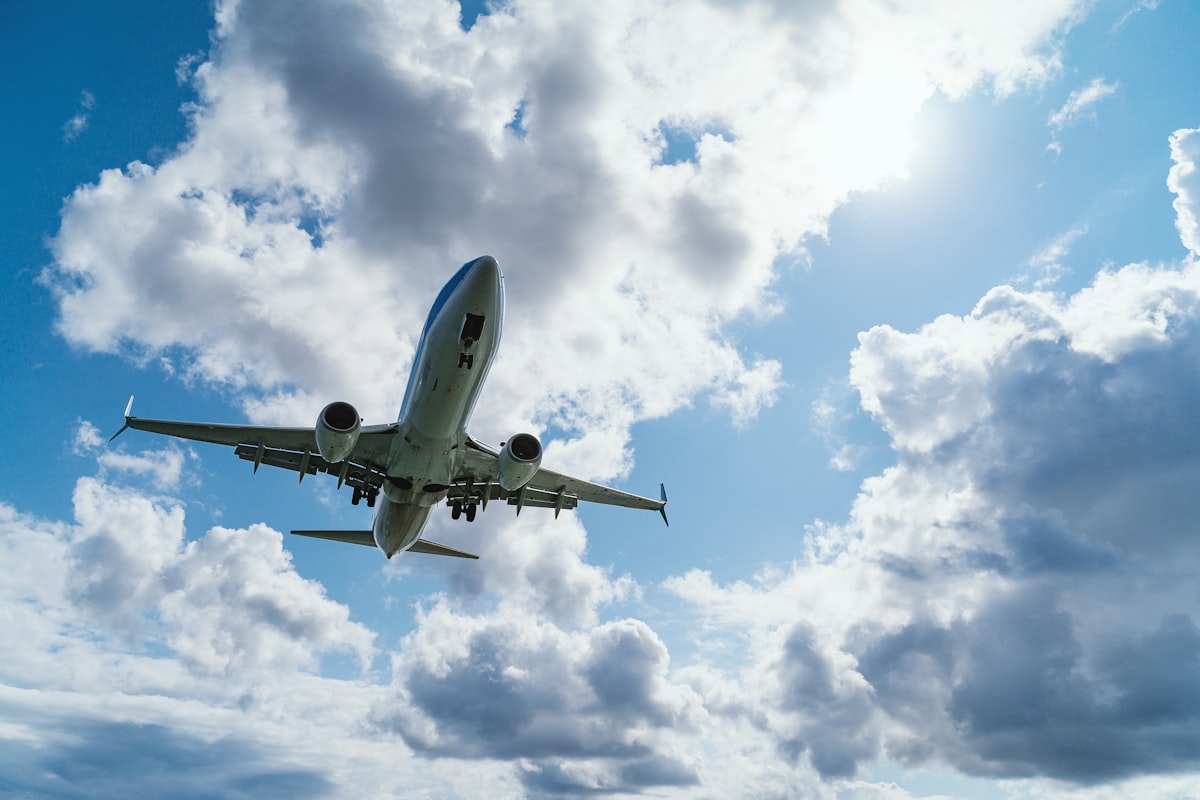
The Aerodynamic Tightrope: Surviving the "Coffin Corner"
Discover the 'Coffin Corner,' the invisible boundary in high-altitude flight where the margin between flying and falling is thinner than a razor's edge.
Imagine you are cruising at 45,000 feet, far above the weather and the chaotic bustle of lower altitudes. To the naked eye, the sky is a serene, deep indigo. However, beneath this tranquility lies one of the most precarious balancing acts in physics: a phenomenon known in the aviation world as the "Coffin Corner."
In the early days of high-altitude flight, pilots discovered a terrifying aerodynamic boundary where the maximum speed of an aircraft meets its minimum speed. To understand this, we have to look at how air changes as we climb. As an aircraft ascends, the air becomes significantly thinner. To generate enough lift to stay airborne in this sparse atmosphere, the plane must fly faster. This increases the aircraft’s "stall speed"—the minimum velocity required to keep the wings working.
Simultaneously, something else is happening. The speed of sound is not a fixed number; it actually decreases as the air temperature drops. At high altitudes where the air is frigid, the speed of sound is much lower than it is at sea level. If a standard subsonic aircraft approaches the speed of sound too closely, shockwaves form over the wings, causing a loss of lift and potentially violent buffeting. This is known as the "critical Mach number."
As the aircraft climbs higher, these two speeds—the stall speed and the critical Mach number—begin to converge. The window of safe operation, often called the maneuvering envelope, begins to shrink. At extreme altitudes, this window can become as narrow as five or ten knots. This is the "Coffin Corner." If the pilot slows down just a fraction, the plane stalls because the air is too thin to support it. If the pilot speeds up just a fraction, the plane hits the sound barrier's edge, causing shock-induced structural stress or a dangerous nose-dive known as "Mach tuck."
The most famous victim—and master—of this phenomenon is the Lockheed U-2 spy plane. During the Cold War, U-2 pilots frequently operated in a margin where only a few miles per hour separated total disaster. One wrong move or a sudden gust of high-altitude wind could kick the aircraft out of its narrow stable zone. Modern business jets, like the Global 7500 or the Gulfstream G700, are designed with sophisticated wings and digital avionics that help manage this risk, allowing them to soar at 51,000 feet with far more stability than their predecessors.
Yet, the Coffin Corner remains a humbling reminder that flight is a constant negotiation with the laws of thermodynamics and fluid dynamics. It is the point where the sky effectively runs out of room, forcing even the most advanced machines to walk a razor-thin line between the earth and the stars.
Sources
- NBAA: High-Altitude Flight Operations and Safety Protocols.
- Aviation Week: The Evolution of High-Mach Wing Design.
- Smithsonian National Air and Space Museum: Records of the U-2 Program Physics.
Editorial Team · Private Aviation Experts
Editorial Team · Private Aviation Experts