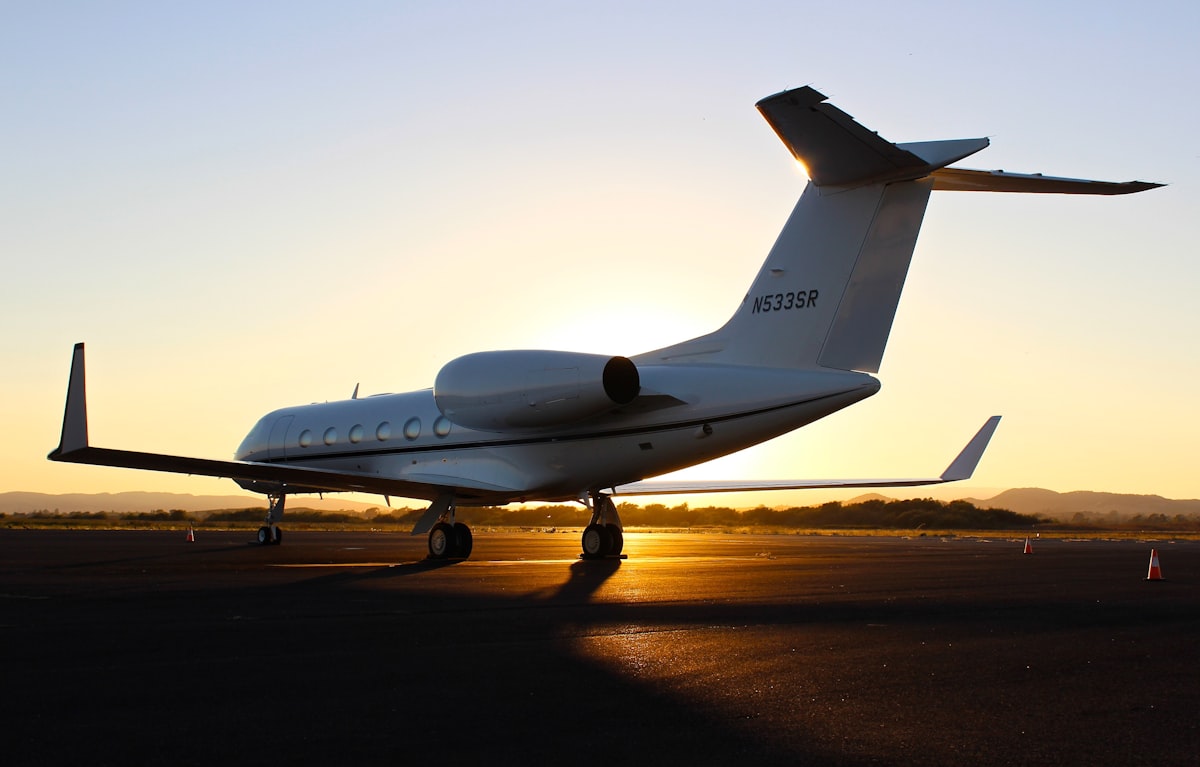
Sky-High Stewardship: Navigating the Future of Sustainable Business Aviation
Discover how the private aviation sector is revolutionizing flight through Sustainable Aviation Fuel (SAF) and next-generation technology to achieve a net-zero future.
The New Era of Responsible Flight
For the discerning traveler, business aviation has always represented the pinnacle of efficiency, privacy, and flexibility. Today, a new pillar is being added to that foundation: environmental stewardship. As global attention shifts toward carbon neutrality, the private aviation sector is not merely reacting to change—it is driving it. Through the industry-wide commitment known as "Climbing. Fast.," spearheaded by the National Business Aviation Association (NBAA) and other stakeholders, the sector has pledged to reach net-zero carbon emissions by 2050.
This transition is powered by a multi-faceted approach involving revolutionary fuels, radical airframe designs, and cutting-edge propulsion systems. For clients of Altair Aviation, understanding these trends is essential for making informed decisions that align luxury travel with Corporate Social Responsibility (CSR) and ESG goals.
Sustainable Aviation Fuel (SAF): The Immediate Solution
The most significant lever for reducing the carbon footprint of private flight today is Sustainable Aviation Fuel (SAF). Unlike traditional Jet A-1, SAF is produced from renewable resources such as used cooking oils, municipal waste, and woody biomass. According to the International Air Transport Association (IATA), SAF can reduce lifecycle carbon dioxide emissions by up to 80% compared to conventional fossil fuels.
One of the most appealing aspects of SAF for aircraft owners and charter clients is its status as a "drop-in" fuel. This means it is chemically similar to traditional jet fuel and requires no modifications to existing engines or airframes. Currently, SAF is typically blended at a 50/50 ratio with traditional fuel, but leading manufacturers like Gulfstream, Bombardier, and Dassault have already conducted successful test flights using 100% SAF, signaling a future where fossil fuels are entirely phased out.
To bridge the gap in physical availability, the industry has introduced the "Book and Claim" system. This allows a client to purchase SAF at an airport where it is not yet physically supplied, essentially funding its use at a location where it is available. This ensures that the environmental benefits are realized within the global aviation ecosystem, regardless of the flight's specific departure point.
Propulsion Revolutions: Electric and Hybrid Power
While SAF addresses the current fleet, the next generation of aircraft is being built around entirely new propulsion architectures. Electric Vertical Takeoff and Landing (eVTOL) aircraft are no longer the stuff of science fiction. Companies such as Joby Aviation and Lilium are developing all-electric platforms designed for urban air mobility and short-regional hops. These aircraft offer zero-emissions flight and significantly reduced noise profiles, making them ideal for connecting metropolitan hubs to private terminals.
For longer missions, hybrid-electric propulsion is emerging as a viable middle ground. By combining traditional turbines with electric motors, manufacturers can optimize engine performance during high-demand phases like takeoff, while relying on cleaner electric power for cruise. This technology promises to reduce fuel burn by 20% to 30% in the medium term.
The Hydrogen Frontier
Looking further toward the 2030s and 2040s, hydrogen fuel cell technology represents the holy grail of zero-emission flight. Hydrogen offers a high energy density without the weight penalties associated with current battery technology. The International Civil Aviation Organization (ICAO) is closely monitoring developments in liquid hydrogen storage and fuel cell efficiency. While challenges remain regarding airport infrastructure and storage volume, hydrogen remains a primary focus for long-range, zero-carbon aviation.
Aerodynamic Efficiency and Intelligent Operations
Sustainability is not only about what goes into the tank; it is also about how the aircraft moves through the air. Modern business jets are incorporating advanced winglets, composite materials, and ultra-smooth finishes to minimize drag. The use of Artificial Intelligence (AI) in flight deck avionics is also playing a crucial role. Modern flight management systems can now calculate the most fuel-efficient trajectories in real-time, accounting for wind patterns and air traffic congestion to minimize unnecessary fuel burn.
Furthermore, engine manufacturers like Rolls-Royce and GE Aerospace are producing new powerplants—such as the Pearl and Passport series—that are significantly more fuel-efficient and quieter than their predecessors. These engines are designed from the ground up to be compatible with future fuel technologies while providing the high-thrust performance that private aviation demands.
The Role of the Premium Broker
At Altair Aviation, we recognize that our clients are increasingly seeking ways to mitigate their environmental impact without sacrificing the benefits of private flight. We actively monitor the availability of SAF across global FBO (Fixed Base Operator) networks and can assist in navigating carbon offset programs that are verified by international standards.
The path to net-zero is complex, but the momentum is undeniable. By investing in SAF and supporting the development of new technologies, the business aviation community is ensuring that the freedom of flight remains a sustainable privilege for generations to come.
Sources
- NBAA (nbaa.org): "Climbing. Fast." Sustainability Initiative and SAF Resource Center.
- AIN Online (ainonline.com): Special Reports on Business Aviation Green Technology.
- IATA (iata.org): Net Zero 2050 Roadmap and SAF Lifecycle Analysis.
- ICAO (icao.int): Environmental Protection and Carbon Offsetting and Reduction Scheme (CORSIA).
Editorial Team · Private Aviation Experts
Editorial Team · Private Aviation Experts